Project focus
English blog publishing practice around Citely, Literfy, and related academic AI tools
CASE STUDY 01
Around Citely and Literfy feature points, I turned capabilities such as citation verification, source tracing, and literature review support into repeatable English blog topics, then ran a real workflow from writing and visuals through publishing and review.
PRODUCT CONTEXT
This case revolves around the core functions of Citely and Literfy: understand the problem each product solves first, then translate those functions into English blog topics that research users can actually understand.
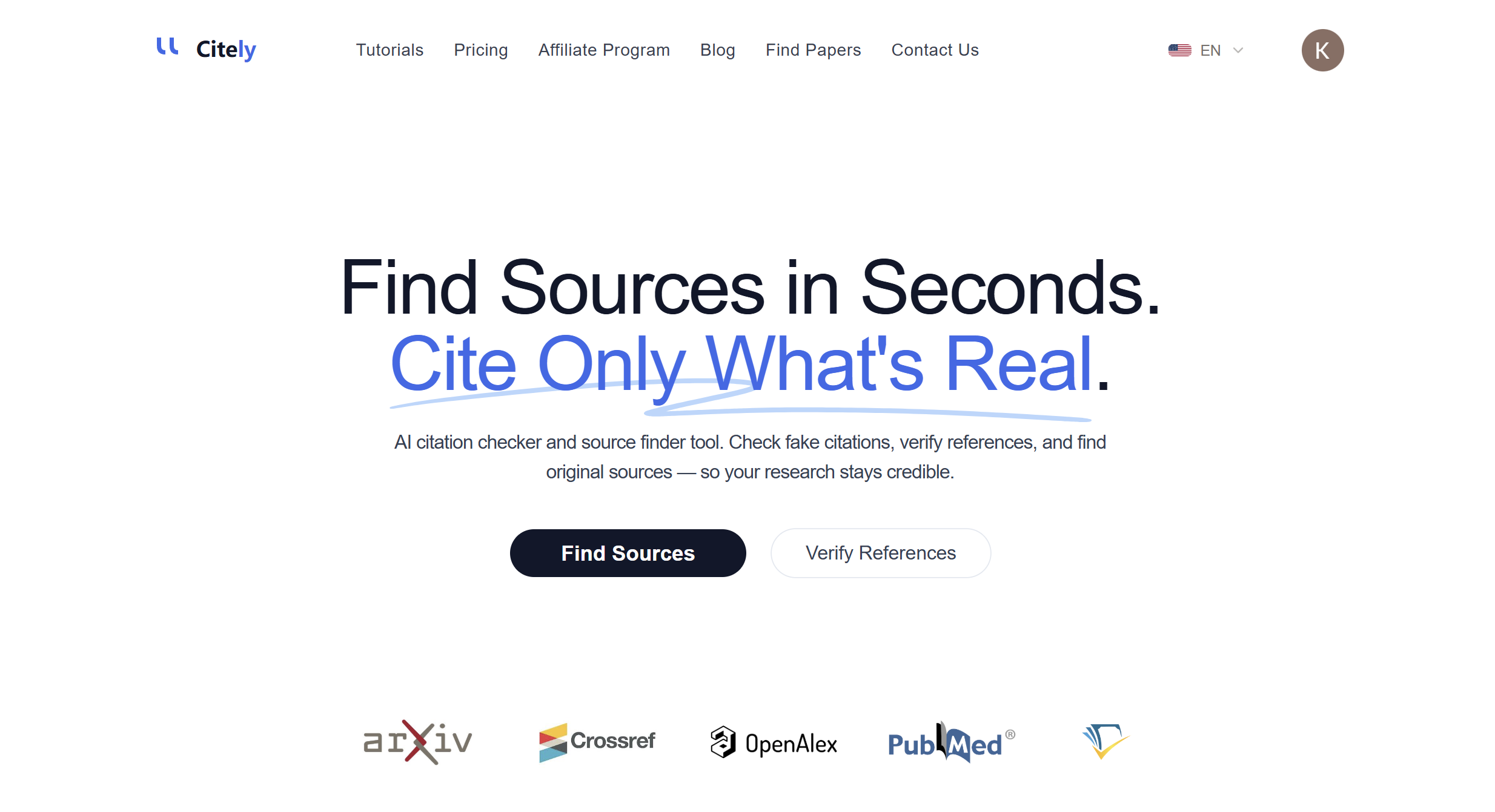
A citation-checking and source-tracing tool for academic writing that helps users identify suspicious citations, verify references, and trace claims back to their original sources.
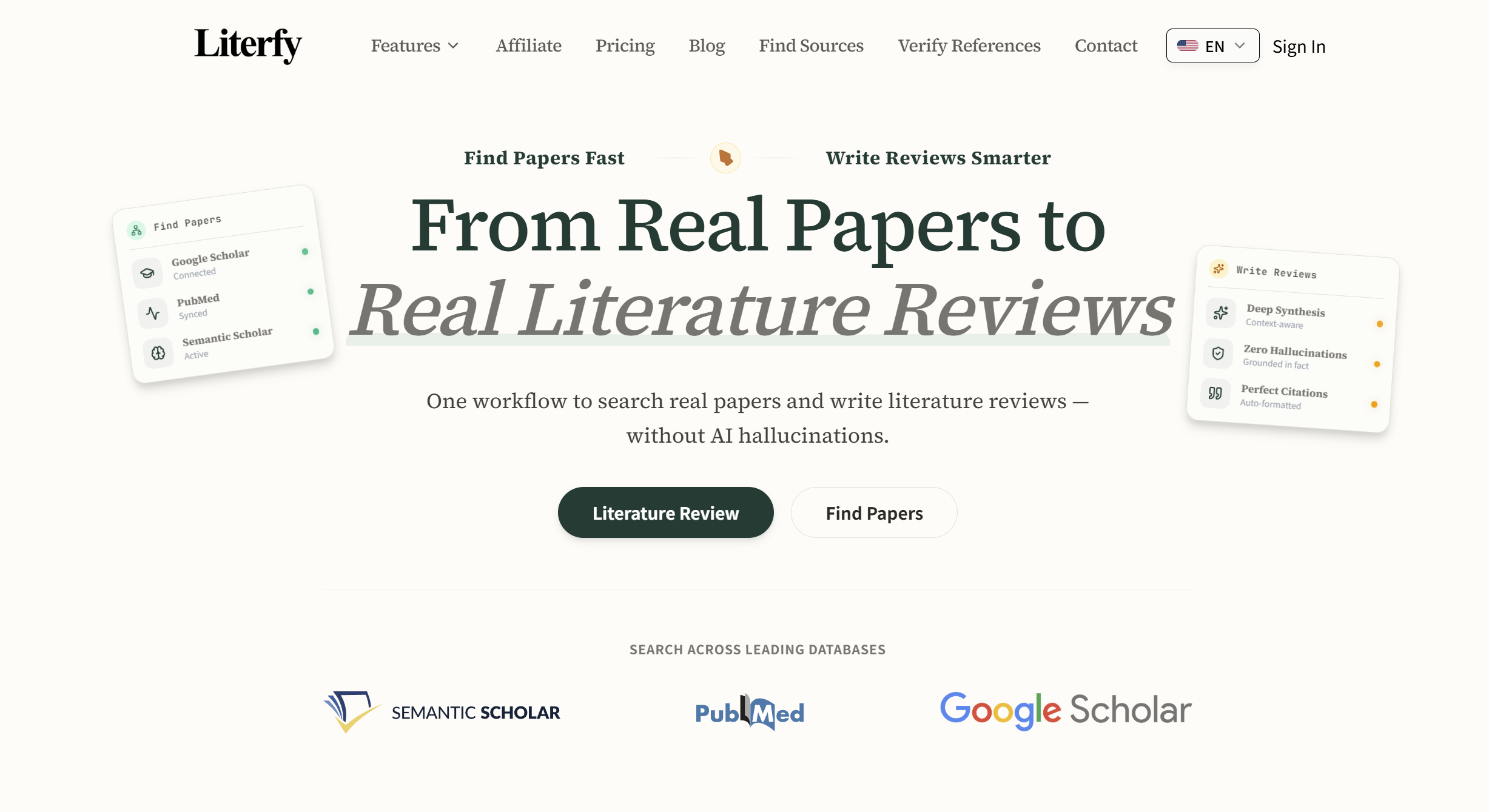
An integrated workflow from real-paper search to literature-review writing, covering paper filtering, outline generation, grounded review drafting, and citation export.
This case was not about rewriting product features into a few isolated posts. It was about breaking Citely and Literfy feature points into repeatable English blog topics, then connecting writing, visuals, publishing, and review into one workflow I could run again.
In practice, I had to start from the real moments where research users get stuck, then decide what problem each article should open with, what visuals it needed, what feedback mattered after publishing, and how the next round should be adjusted.
Core work scope
I did not begin with generic topics. I mapped product features to user problems first, then defined the article themes.
Product feature
User problem
Whether citations are real and references can be checked quickly
Content theme
Citation checking
Product feature
User problem
Whether sources can be traced and how references connect to each other
Content theme
Source finding
Product feature
User problem
How literature reviews should be organized and where AI can realistically help
Content theme
Literature review support
Product feature
User problem
Whether AI-generated content is reliable and how fake citations should be handled
Content theme
AI hallucination / fake citation
Product feature
User problem
How the research-writing workflow can become more efficient and where tools fit into real work
Content theme
Research workflow
Brief
Scope and angle
Define the product feature, target user, and article angle.
Draft
Draft structure
Draft the article from the brief and refine the structure.
Source Check
Check accuracy
Check citations, tool information, and content accuracy.
Images
Prepare visuals
Prepare image tasks and article visual materials.
Publish
Publish setup
Publish to Medium and set the title, tags, and core metadata.
Review
Review signals
Record views, reads, claps, and followers, then note headline and topic feedback.
Each blog card keeps the real published screenshot and explains the user problem, mapped feature, and evidence type it proves.
Frames citation verification as a basic research-writing task by starting from common citation mistakes and research credibility.
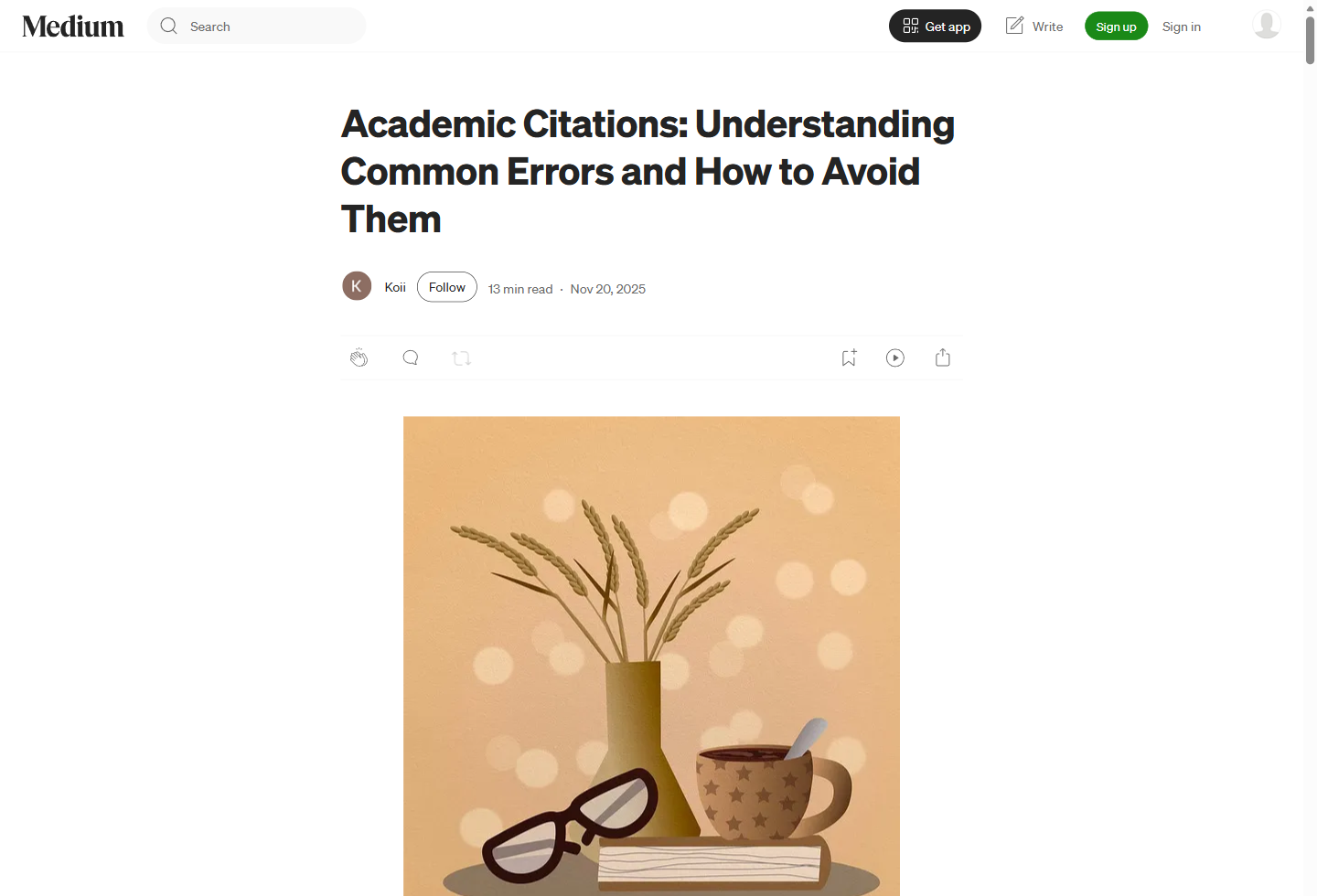
User problem
Students and research writers worry about citation mistakes but do not know how to check whether references are real and reliable.
Product feature
Citation verification / Academic integrity
Evidence
Article screenshot / article link
Places Literfy back into a real research workflow, showing how literature organization, knowledge capture, and AI tools can sit in the same path.

User problem
In research writing, source relationships and organization paths are often unclear, and users do not always know how AI tools fit into their existing workflow.
Product feature
Research workflow / Source tracing
Evidence
Article screenshot / article link
Uses citation verification and source tracing to explain how students can check references more efficiently instead of tracing sources manually for hours.
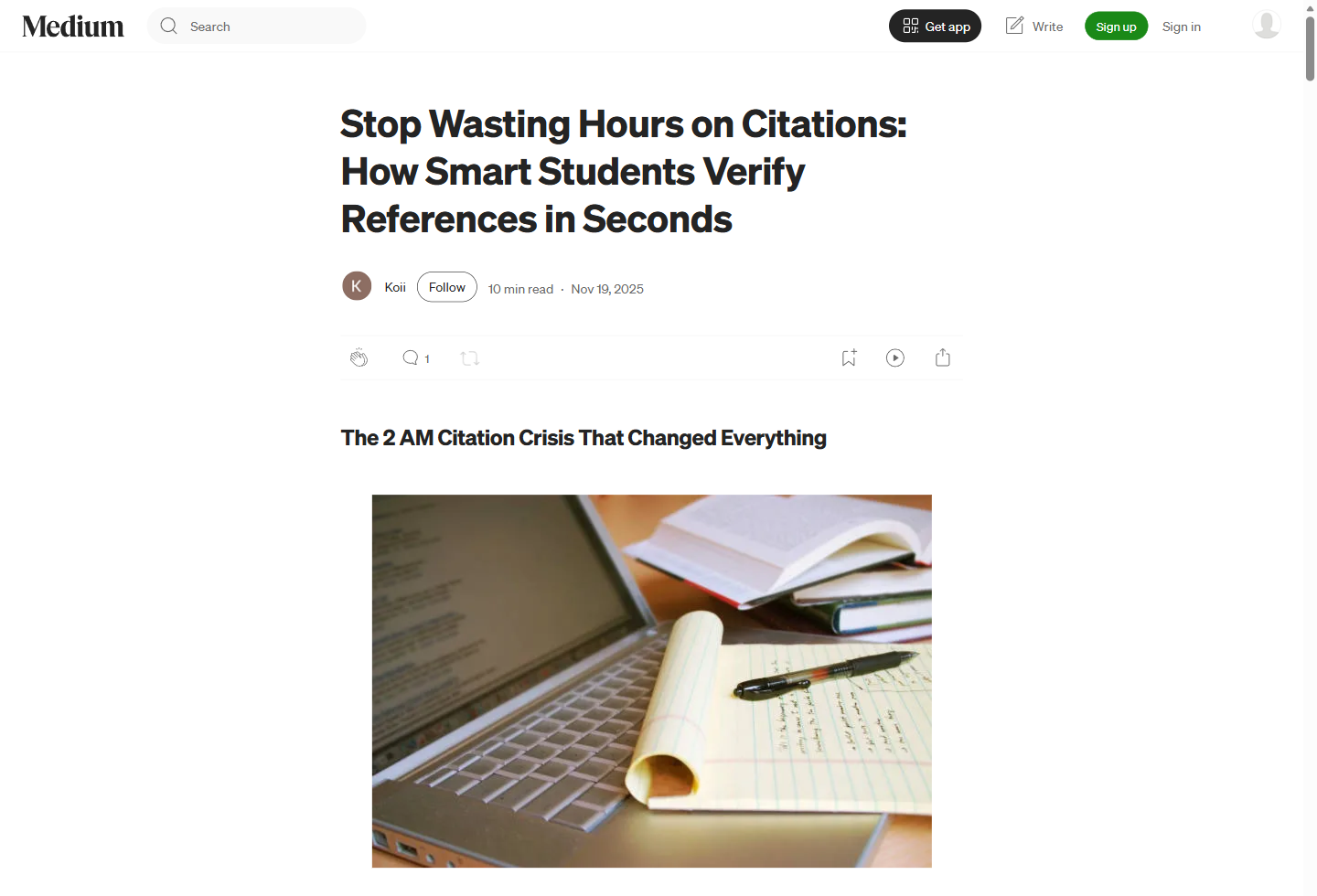
User problem
Students know citations need checking, but do not know how to verify them quickly and do not want to spend too much time on source tracing.
Product feature
Citation verification / Source tracing
Evidence
Article screenshot / article link
Explores the real boundary of literature review writing by clarifying what AI can support and what it should not replace.
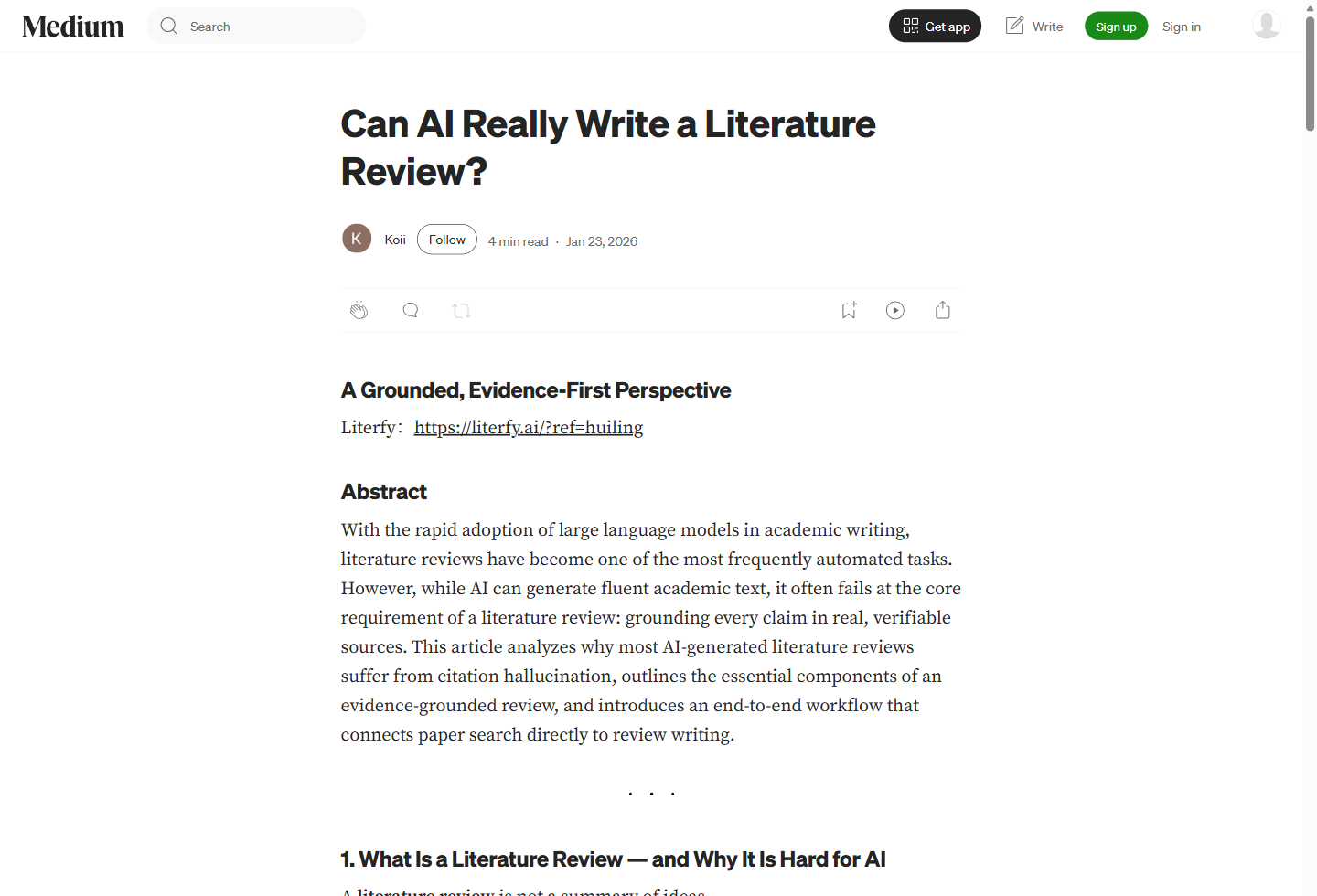
User problem
Users want to know whether AI can assist with literature reviews and where the real boundary lies in research writing.
Product feature
Literature review writing
Evidence
Article screenshot / article link
This section keeps a real post-publish snapshot rather than framing it as a performance result. The numbers are still small, so I use them mainly to judge which titles, tags, and topic directions are worth testing next.
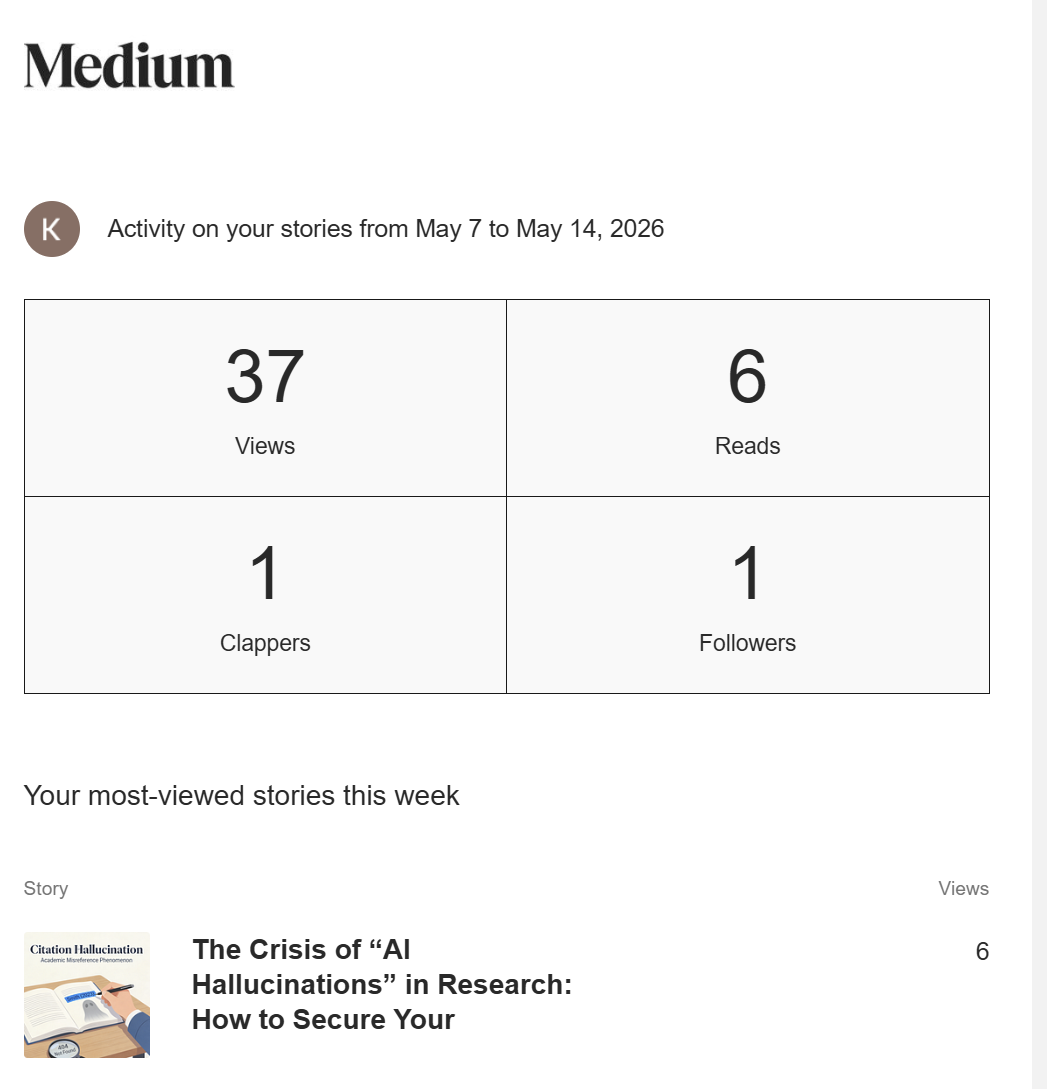
REVIEW NOTES
I treat this report as review material rather than proof of growth. It helps me see what worked in this round and where the next round should be adjusted.
Start with views and reads to judge whether the headline and opening explain the problem clearly enough.
Then use claps and followers to see whether the article has any basic pull beyond the first click.
Topics tied directly to writing pain points, such as citation verification, are more worth continuing to test.
Tags that point to concrete research scenarios are more useful to keep than abstract feature words.
The next round will keep comparing problem-led headlines with tool-led headlines to see which framing earns the click.
Publishing cadence, the first paragraph, and article structure still need tuning to find a steadier reading pattern.
Next
Keep the bottom actions lightweight so they support the case study instead of overpowering it.